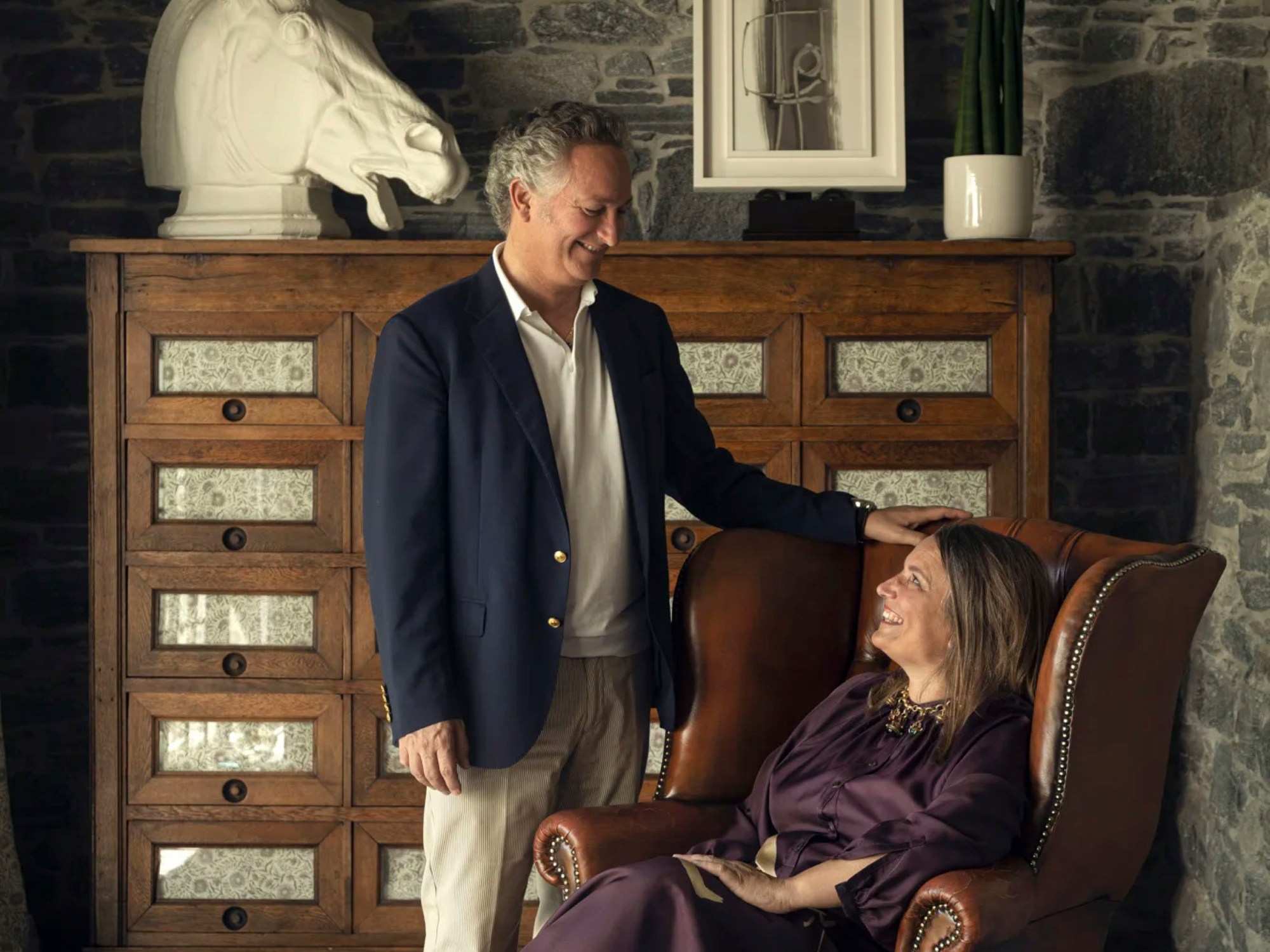

AD : La casa dell’artista ritrovato
Casa San Tomaso
(originally known in the 1930s as Halla House) is a legendary landmark in 20th-century art history. Nestled on the slopes of the famous Monte Verità in Ascona, overlooking Lake Maggiore, this villa served as a sanctuary for the European avant-garde and a vibrant center for modern art.
The history of the house is uniquely defined by two extraordinary eras:
1. The Nell Walden Era (1930s – 1950s)
- A Sanctuary from Nazi Germany: In 1933, Swedish artist, musician, and art collector Nell Walden fled Germany due to the rise of the Nazi regime. She relocated to Switzerland and purchased the villa as her permanent residence in Ascona.
- A Secret Private Museum: Nell managed to bring her world-class art collection to Ticino, effectively saving it (the artworks left behind in German storage warehouses were later destroyed during wartime bombings). Visitors to Halla House found themselves surrounded by masterpiece paintings by Wassily Kandinsky, Paul Klee, Franz Marc, Marc Chagall, and Robert Delaunay hanging directly in her living room.
- An Avant-Garde Hub: The villa became a focal point for exiled intellectuals and artists. Lifelong friends like Jean Arp would visit, and the house functioned as a logistical base to catalog, preserve, and safely transport avant-garde masterpieces to Swiss museums. Nell also kept her extensive collection of ethnographic art from Bali and Java here.
2. The Legacy of Luigi Pericle (1959 – 2016)
- The Gift of a Patron: In 1959, Basel art collector Peter G. Staechelin was so deeply impressed by the genius of the Italian painter and intellectual Luigi Pericle (then internationally famous as the illustrator of the Max the Hamster cartoons under the pseudonym Giovannetti) that he decided to buy the house from Nell Walden specifically for Pericle and his wife, Nini, ensuring the artist could work in complete peace.
- The Transition to Casa San Tomaso: Upon moving into the villa, Luigi Pericle officially renamed it Casa San Tomaso in honor of St. Thomas Aquinas. The very walls that once showcased the expressionists of Der Sturm now witnessed Pericle’s evolution into a mystical, solitary painter, deeply invested in theosophy, astrology, and Zen philosophy.
- The 2016 Time Capsule Rediscovery: Following Pericle’s death in 2001, the couple left no heirs, and the villa was sealed up, remaining untouched for 15 years. In 2016, the new owners, Andrea and Greta Biasca-Caroni, opened the property and discovered a vast, pristine archive hidden inside: hundreds of unknown paintings, manuscripts, and rare texts, bringing the century-long artistic aura of the house back into the international spotlight.
The Austrian sculptor Toni Schneider-Manzell actually lived inside that very house in Ascona with Nell Walden for a period. It was precisely through Walden’s extensive network of avant-garde exiles and Schneider-Manzell’s presence that the villa—then called Halla House—became a vibrant crossroads for some of the greatest minds of 20th-century European culture.
The list of notable figures who were guests, close friends, or frequent visitors within this specific inner circle included:
1. The Heavyweights of Literature, Theater, and Music
- Erich Maria Remarque: The world-famous author of All Quiet on the Western Front, who lived as an exile in his nearby villa, Casa Monte Tabor, in Porto Ronco. He was a prominent figure in the local intellectual circle surrounding Nell Walden and Schneider-Manzell.
- Kurt Weill: The legendary avant-garde composer best known for The Threepenny Opera. He frequented the artistic community of Ascona during his periods of displacement.
- Else Lasker-Schüler: The iconic German-Jewish Expressionist poet. Her connection to the house runs incredibly deep, as she had been the first wife of Herwarth Walden (Nell’s former husband and co-founder of Der Sturm). She visited the Ticino region as a refuge before her final exile in Jerusalem.
2. The Der Sturm and Dada Pioneers
- Jean Arp and Sophie Taeuber-Arp: Lifelong friends of Nell from her Berlin days, the artistic couple viewed the villa as an essential anchor during their frequent stays in Ascona and Monte Verità.
- Arthur Segal: The Romanian Expressionist painter who ran an influential art school in Ascona and was a core member of Nell Walden’s local circle.
3. The Mystics and Patrons of Monte Verità
Because the villa sat directly on the slopes of Monte Verità, it naturally attracted intellectuals, theosophists, and scholars participating in the famous Eranos Conferences held just down the road in Moscia. Nell Walden’s deep personal passion for astrology and esotericism made the house an ideal salon for these thinkers.
- Peter G. Staechelin: The prominent art collector from Basel who regularly visited the villa. His close relationship with the property culminated in 1959, when he bought it directly from Nell Walden to gift it to the painter Luigi Pericle.
Under that single roof, the literature of Remarque, the music of Weill, the poetry of Lasker-Schüler, and the sculpture of Schneider-Manzell seamlessly intersected, protected by the peaceful shores of Lake Maggiore.
___________________
Casa San Tomaso
(conosciuta originariamente negli anni ’30 come Halla House) è un luogo quasi leggendario della storia dell’arte del Novecento. Si trova ad Ascona, adagiata sulle pendici del celebre Monte Verità, immersa nella natura e nella tranquillità del Lago Maggiore. [1, 2]
La casa rappresenta una vera e propria capsula del tempo che ha racchiuso lo spirito di due epoche artistiche straordinarie, prima con l’avanguardia storica europea e poi con il misticismo astratto.
L’epoca di Nell Walden (Anni ’30 – ’50)
- Il rifugio della collezione blindata: La svedese Nell Walden (artista, musicista e collezionista fondamentale del gruppo espressionista berlinese Der Sturm) si trasferì formalmente in Svizzera nel 1933 per sfuggire alla situazione politica tedesca. Acquistò la villa trasformandola nel suo quartier generale ad Ascona. [1, 2, 3, 4, 5, 6]
- Un museo privato segreto: Nell portò con sé in Ticino la strabiliante collezione d’arte che aveva accumulato ed ereditato (i quadri rimasti nei magazzini in Germania andarono poi distrutti sotto i bombardamenti). Chi entrava a Halla House in quegli anni camminava circondato da capolavori assoluti di Wassily Kandinsky, Paul Klee, Franz Marc, Marc Chagall e Robert Delaunay, appesi alle pareti del salotto come in una galleria d’arte privata. [5, 6, 7]
- Il centro di scambio intellettuale: Oltre a ospitare grandi artisti di passaggio come Jean Arp, la villa divenne una base di appoggio logistica per spedire o prestare le opere ai musei svizzeri per metterle in sicurezza. Nell vi custodì anche la sua enorme collezione di arte etnografica (con pezzi rari provenienti da Bali e Giava). [3, 8, 9]
Il passaggio di testimone e l’era Luigi Pericle (1959 – 2016)
- Il dono di un mecenate: Nel 1959, il grande collezionista d’arte di Basilea Peter G. Staechelin rimase così folgorato dal genio del pittore italiano Luigi Pericle (allora noto anche come illustratore con lo pseudonimo di Giovannetti) che decise di comprargli una casa ad Ascona per permettergli di dipingere in totale serenità. Staechelin acquistò la villa proprio da Nell Walden. Per raccogliere i fondi necessari, il collezionista vendette persino dei preziosi disegni di Egon Schiele e Gustav Klimt al Leopold Museum di Vienna. [1, 10]
- La metamorfosi in Casa San Tomaso: Stabilitosi nella villa con la moglie Nini, Luigi Pericle la ribattezzò ufficialmente Casa San Tomaso, in omaggio al filosofo e teologo San Tommaso d’Aquino. Le pareti che avevano ospitato gli espressionisti di Der Sturm videro nascere la produzione pittorica informale, segreta e fortemente spirituale di Pericle. [2, 4, 10]
- La riscoperta del 2016: Alla morte di Pericle (avvenuta nel 2001 senza eredi), la casa venne sigillata e rimase abbandonata per ben 15 anni. Nel 2016, i nuovi acquirenti Andrea e Greta Biasca-Caroni, riaprendo le porte della villa, hanno scoperto un tesoro intatto: centinaia di dipinti inediti, manoscritti, lettere e testi di teosofia e astrologia accumulati da Pericle, restituendo al mondo la memoria di un luogo che per quasi un secolo ha “trasudato” l’energia delle avanguardie europee. [4, 11]
È un’osservazione e un’aggiunta storica straordinaria: lo scultore Toni Schneider-Manzell ha vissuto per un periodo proprio all’interno di quella casa ad Ascona insieme a Nell Walden. Fu proprio in quel contesto e tramite la fitta rete di contatti della Walden che Schneider-Manzell conobbe e frequentò alcune delle più grandi personalità della cultura europea del Novecento che orbitavano attorno alla dimora o vi facevano visita: [1]
Erich Maria Remarque (lo scrittore di Niente di nuovo sul fronte occidentale, che viveva nella vicina Porto Ronco).
Kurt Weill (il celebre compositore de L’opera da tre soldi).
Else Lasker-Schüler (la leggendaria poetessa espressionista, che tra l’altro era stata la prima moglie di Herwarth Walden). [1, 2, 3]
Oltre a questi nomi giganteschi, la cerchia di ospiti e frequentatori della villa (all’epoca chiamata Halla House) e della rete ticinese di Nell Walden includeva:
1. I pilastri delle Avanguardie e di Der Sturm
- Jean Arp e Sophie Taeuber-Arp: Amici intimi di Nell sin dagli anni berlinesi, che consideravano la casa un punto di riferimento fondamentale durante i loro soggiorni in Ticino.
- Arthur Segal: Il pittore espressionista rumeno che frequentava assiduamente Ascona e il Monte Verità, strettamente legato a Nell.
2. Le menti del Monte Verità e degli incontri di Eranos
La casa sorgeva in una posizione strategica sulle pendici del Monte Verità. Durante gli anni ’30 e ’40, la Walden ospitò o entrò in contatto con intellettuali, teosofi e psicologi che partecipavano ai celebri Colloqui di Eranos a Moscia (Ascona), attirati anche dalla passione di Nell per l’astrologia e l’esoterismo.
3. I grandi collezionisti e mecenati
- Peter G. Staechelin: Il celebre collezionista d’arte di Basilea. Frequentò la casa e la stessa Nell Walden, finché nel 1959 non decise di acquistare la villa direttamente da lei per donarla al pittore Luigi Pericle. [4]
La casa era a tutti gli effetti un magnete culturale: un crocevia unico in cui la letteratura di Remarque, la musica di Weill, la poesia della Lasker-Schüler e l’arte visiva di Der Sturm si incontravano sotto lo stesso tetto, protetti dalla quiete del Canton Ticino. [1, 3]
Ti interessa approfondire il legame speciale che c’era tra Erich Maria Remarque e la comunità di artisti di Ascona, o preferisci scoprire di più sulle opere che lo scultore Toni Schneider-Manzell realizzò in quel periodo? [1]
[1] https://www.deutsche-biographie.de
[4] https://www.ascona-locarno.com
[7] https://andreasschlothauer.com

